Imagine Your Kitchen Reducing Your Power Bill
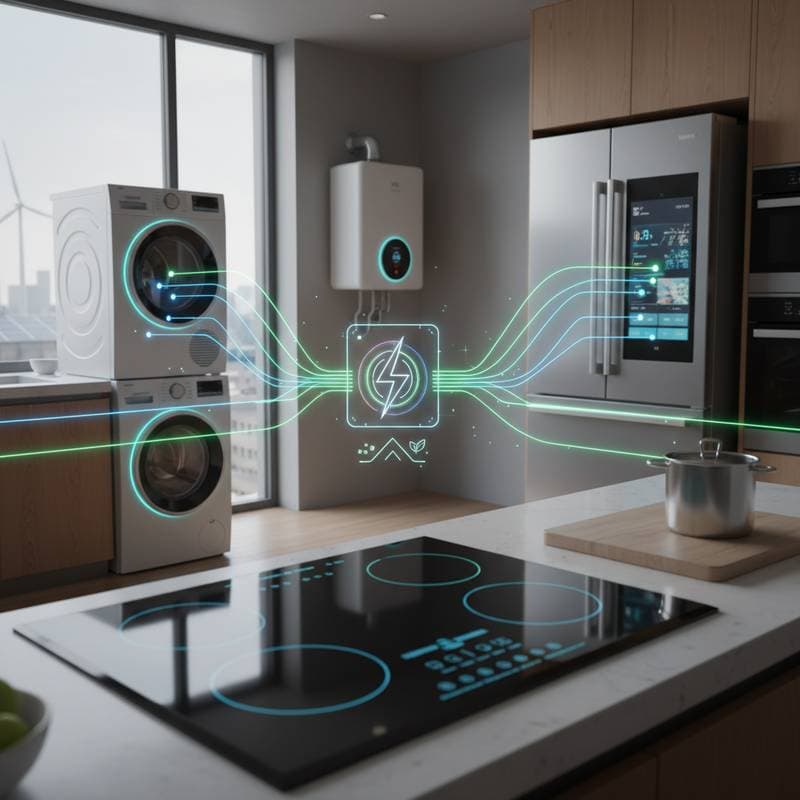
Power bills rise each month despite efforts to conserve energy. Lights switch off promptly, thermostats remain at reasonable settings, and dishwashers operate during nighttime hours. Costs continue to increase. Now consider appliances that communicate with the electric grid to adjust usage during high-rate or peak-demand periods. This capability exists today. Smart appliances integrate directly with the grid, enabling homeowners to achieve substantial savings while contributing to energy stability.
These devices transform kitchens, laundry areas, and heating systems into efficient energy allies. Appliances handle timing decisions for tasks such as washing clothes or preheating ovens, coordinating with utilities to minimize expenses and support grid balance.
Challenges of Conventional Power Consumption
Standard home appliances operate without awareness of external energy conditions. They consume power upon activation, irrespective of current electricity pricing. When numerous households follow similar patterns, utilities activate costly reserve generators or purchase energy from distant sources. Such measures elevate expenses for all consumers.
Time-of-use pricing structures, which fluctuate rates by time of day, depend on manual habit adjustments. Forgetting to adapt proves common. Connected appliances address this by responding autonomously, modifying operations to align with lower-cost or more sustainable energy availability.
Understanding Smart Grid Integration
Smart appliances link to the electric grid via home Wi-Fi or dedicated hubs tied to utility demand response initiatives. Upon receiving grid alerts for elevated demand, appliances execute the following actions:
- Postpone or interrupt cycles until demand eases.
- Reduce power intake briefly, for instance by moderating refrigerator compressor speed.
- Accumulate energy in built-in storage for subsequent deployment.
Individual adjustments appear minor, yet collective impact across communities provides substantial grid support. Utilities incentivize involvement through rebates or discounted rates, delivering tangible financial benefits with minimal user disruption.
Insider Tip: Utilities frequently provide eco modes for compatible appliances that enroll in demand response automatically. Activation often requires only a single app adjustment from the manufacturer to begin receiving credits.
Leading Devices in Grid Connectivity
Grid-enabled appliances fall within the smart energy and sustainability sector, where advancements occur rapidly. Examine prominent examples poised for maximum impact.
Smart Washers and Dryers
Contemporary washers, such as the LG ThinQ Smart Front Load Washer (approximately 850 dollars), synchronize with energy systems to schedule cycles during off-peak intervals. The Samsung Smart Dial Front Load Washer (approximately 1,100 dollars) accommodates user preferences for automatic delays in response to utility alerts. The GE Profile UltraFresh Combo Washer Dryer (approximately 2,800 dollars) interfaces with prominent grid programs and aligns with solar or battery setups.
Smart Refrigerators
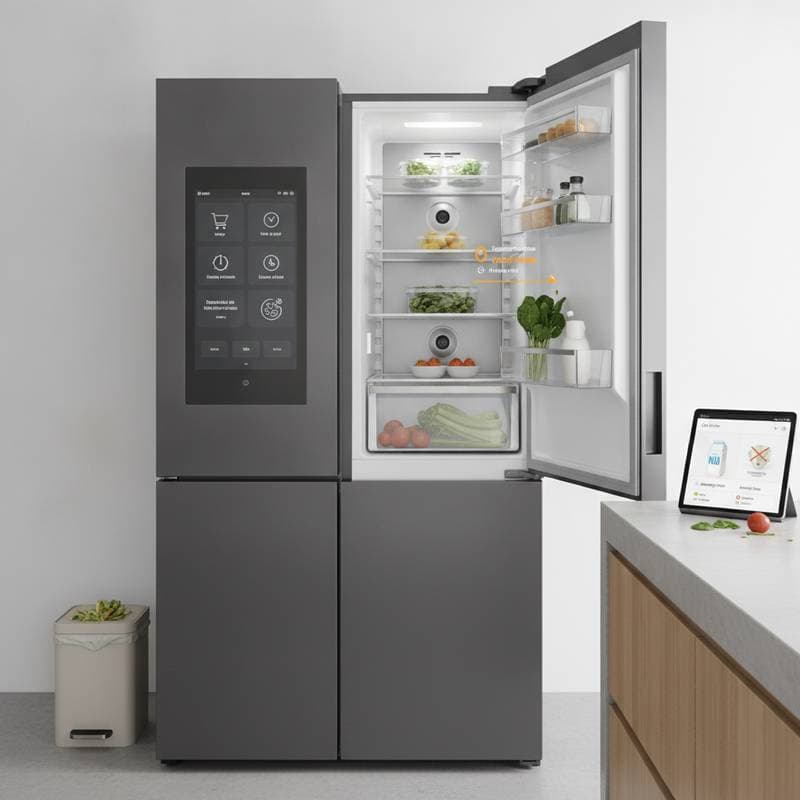
Constant-operation refrigerators suit precise load modulation. The Whirlpool Smart French Door Refrigerator (approximately 2,000 dollars) shifts to energy-efficient cooling upon utility notification. The Insignia Smart Top-Freezer Refrigerator (approximately 650 dollars) employs Wi-Fi via Alexa or Google Home for optimized defrost management. The LG InstaView ThinQ Refrigerator (approximately 3,500 dollars) interfaces directly with monitoring systems and logs usage data for refinement.
Smart Dishwashers and Ovens
High-power devices like dishwashers and ovens benefit from timed adjustments. The Bosch 300 Series Smart Dishwasher (approximately 950 dollars) postpones operations during peak pricing. The Samsung Smart Wall Oven (approximately 1,600 dollars) initiates preheating at optimal rates, while the Café Smart Double Oven (approximately 3,900 dollars) links to energy interfaces for schedule optimization.
Smart Water Heaters
The Rheem ProTerra Hybrid Water Heater (approximately 1,700 dollars) stands out for grid responsiveness. It adapts to household patterns, warming water during economical periods and reserving it for demand. Utilities commonly provide rebates exceeding several hundred dollars for qualified installations.
Mechanisms of Demand Response Savings
Enrollment in demand response programs allows utilities to transmit adjustment signals to appliances. These prompts guide minor consumption reductions or operation shifts. Participants receive bill credits or rate reductions based on program terms.
Effective use of several devices yields savings of 10 to 25 percent on overall energy expenses. Automation eliminates ongoing user intervention, handling choices that once demanded manual oversight.
Insider Tip: Post-installation, registration with the utility demand response portal proves essential. Unregistered devices operate efficiently yet forfeit credit eligibility. Complete linkage via manufacturer apps or utility sites.
Guide to Implementing Grid Integration
- Verify utility eligibility. Locate demand response or time-of-use offerings. Utilities detail compatible brands and rebate opportunities.
- Select suitable appliances. Prioritize Energy Star models marked as connected or grid-compatible.
- Execute installation properly. Adhere to manufacturer guidelines. Engage licensed professionals for water heaters to meet safety standards.
- Establish Wi-Fi linkage. Employ the device app to connect to the network, then approve utility program access.
- Configure settings. Specify desired savings intensity, balancing between optimization and convenience.
- Track outcomes. Apps reveal current usage and projected savings. Observe patterns over initial months.
Financial and Setup Factors
Initial investments for grid appliances exist, offset by available rebates. Typical price ranges include:
- Washing machines and dryers: 700 to 3,000 dollars
- Refrigerators: 600 to 4,000 dollars
- Dishwashers and ovens: 800 to 4,000 dollars
- Water heaters: 1,000 to 2,500 dollars
Setup per appliance spans a few hours. Professional assistance suits complex units like water heaters involving wiring or plumbing. Deactivate power at the breaker prior to electrical tasks, and confirm voltage and amperage alignment.
For comprehensive upgrades, a smart energy hub unifies oversight. Options such as the Sense Energy Monitor (approximately 300 dollars) or Emporia Vue Smart Energy Monitor (approximately 250 dollars) aggregate device data into a unified interface for usage and savings analysis.
Enduring Advantages and Ecological Gains
Benefits encompass financial relief and environmental contributions. Off-peak shifting eases grid pressure and favors renewable integration during peak production. Cumulative effects diminish carbon emissions and enhance appliance durability through optimized component operation.
Pairing with solar panels or batteries amplifies results. Surplus midday solar energy charges devices like water heaters, allowing reduced grid reliance during costly evenings.
This approach fosters homes that contribute to equitable, sustainable energy networks beyond mere cost reduction.
Addressing Frequent Questions
Privacy and control concerns arise for some users. Override options remain available at all times. Signals function as suggestions, with manual activation possible via apps or panels. Data transmission employs encryption, and utilities oversee network integrity.
Compatibility issues warrant pre-purchase verification against local utility protocols. Seek certifications like OpenADR or ENERGY STAR Connected for assurance.
Pathways to Energy Optimization
Assess current appliances for smart potential. Recent models from leading brands often feature upgradable Wi-Fi via firmware.
Consult utility resources for integration programs, including complimentary accessories like smart plugs. Initial credits demonstrate seamless operation.
When replacing units, favor grid-certified options. Utilize the XavageTech Marketplace to engage certified professionals for installation and verification.
Grid-connected appliances redefine residential energy handling, delivering savings, emission cuts, and systemic participation with minimal effort.
FAQs
What defines a grid-connected appliance?
It communicates with utility systems to modulate power based on demand or rate signals.
Does installation require unique wiring?
Standard outlets suffice for most. Larger units like water heaters may need expert electrical work.
What monthly savings are realistic?
Figures vary by engagement and rates, typically 10 to 25 percent of bills.
Can signals be overridden?
Yes, normal operation activates through apps or controls anytime.
Are programs universally accessible?
Coverage differs; review utility sites for demand response or time-of-use details.
How do outages affect functionality?
Appliances revert to standard mode, resuming smart features post-restoration.
Do they integrate with solar or batteries?
Yes, many coordinate to optimize power draw and storage.
Is appliance data protected?
Encryption and secure storage safeguard transmissions; maintain firmware updates.