Understanding Palm Recognition Smart Locks
Palm recognition smart locks represent a significant advancement in home security technology. These devices use biometric scanning to identify users based on the unique patterns of veins in their palms. Homeowners gain access without keys, cards, or codes, enhancing both convenience and safety.
The technology relies on near-infrared light to capture vein patterns beneath the skin. Unlike fingerprint scanners, palm recognition penetrates deeper, making it more resistant to spoofing attempts. This method ensures that only authorized individuals can enter, providing peace of mind for families.
How Palm Recognition Technology Functions
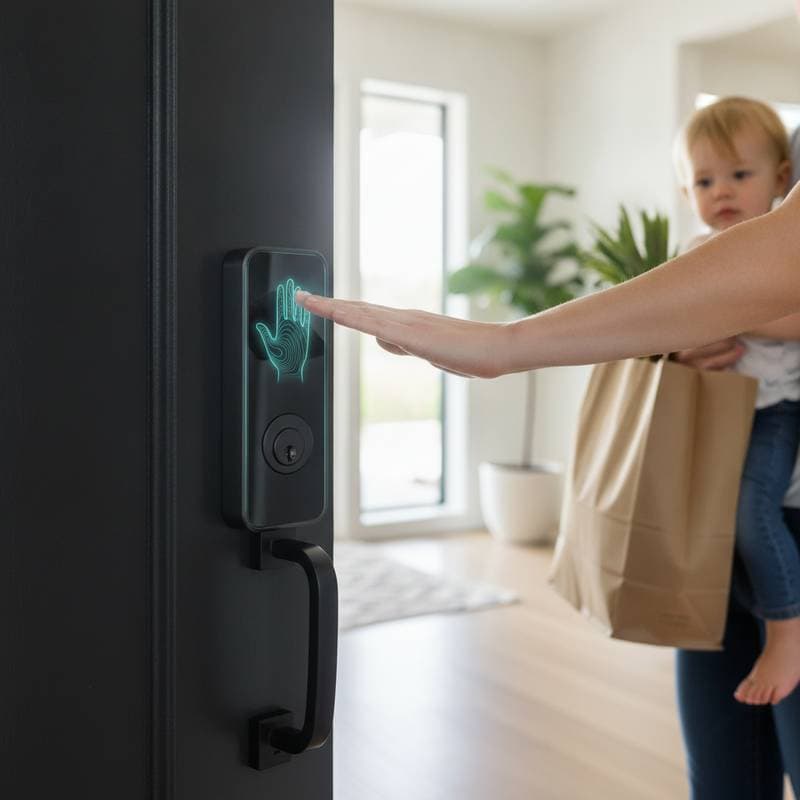
At the core of these locks lies a sophisticated sensor array. When a user places their hand over the reader, infrared sensors illuminate the palm and detect the vascular structure. The system processes this data against pre-registered profiles to grant or deny access within seconds.
Vein patterns remain stable throughout life and differ uniquely among individuals, even for identical twins. This reliability surpasses traditional biometrics in accuracy. Integration with smart home ecosystems allows remote monitoring and control via mobile applications.
Security features extend beyond identification. Many models include encryption protocols to protect data transmission. Tamper alerts notify owners of unauthorized access attempts, integrating seamlessly with alarm systems.
Key Benefits for Modern Homeowners
Palm recognition locks eliminate the risks associated with lost keys or forgotten codes. Users enjoy touch-free entry, which proves especially valuable in hygienic environments or during health-conscious times. The speed of access reduces wait times at doors, improving daily efficiency.
Energy efficiency stands out as another advantage. These locks often feature low-power modes and battery lives exceeding six months. Compatibility with voice assistants enables hands-free operation, further streamlining routines.
From a security perspective, the technology deters burglars effectively. Visible biometric readers signal advanced protection, while false acceptance rates remain below 0.01 percent in leading models. Homeowners report higher satisfaction with systems that combine multiple authentication layers.
Top Palm Recognition Lock Models to Consider
Several manufacturers lead the market with innovative palm recognition solutions. The Ultralock Pro series offers robust construction and app-based customization. Users appreciate its weather-resistant design, suitable for both interior and exterior doors.
Another strong contender is the SecurePalm Elite, which supports up to 50 user profiles. This model excels in multi-family settings, with adjustable sensitivity for varying hand sizes. Integration with existing deadbolts simplifies upgrades without full replacements.
For budget-conscious buyers, the PalmGuard Basic provides essential features at an accessible price point. It includes auto-locking mechanisms and guest access codes as backups. Each model undergoes rigorous testing to meet industry safety standards.
- Ultralock Pro: Advanced encryption, 12-month battery, smart home compatible.
- SecurePalm Elite: Multi-user support, tamper detection, easy retrofit.
- PalmGuard Basic: Affordable entry, basic biometrics, reliable performance.
Installation and Setup Guide
Installing a palm recognition lock requires basic tools and follows a straightforward process. Begin by removing the existing lockset, typically involving a screwdriver to detach the old hardware. Measure the door bore to ensure compatibility with the new device.
Position the palm reader at a comfortable height, around 42 inches from the floor. Secure the mounting plate with provided screws, then wire the unit if it connects to a power source or smart hub. Most models include templates for precise alignment.
Registration involves scanning each authorized user's palm multiple times for accuracy. The setup app guides through calibration, testing access in various lighting conditions. Professional installation services remain available for complex setups.
- Gather tools: screwdriver, drill, level.
- Remove old lock and prepare door.
- Mount new hardware and connect wiring.
- Register users via app or onboard interface.
- Test functionality and adjust settings.
Maintenance keeps the system performing optimally. Clean the sensor surface weekly with a soft cloth to remove residues. Update firmware regularly through the companion application to address vulnerabilities.
The Future of Secure Access in Smart Homes
Palm recognition locks set the stage for broader biometric adoption in residences. As artificial intelligence evolves, these systems will predict user needs and adapt security levels dynamically. Integration with facial recognition or behavioral analysis promises even stronger defenses.
Homeowners benefit from reduced insurance premiums due to enhanced protection. Communities adopting these technologies experience lower crime rates, fostering safer neighborhoods. The shift toward contactless solutions aligns with global trends in health and convenience.
Consider upgrading your entry system to experience these advantages firsthand. Evaluate models based on your household size and integration preferences. Secure, effortless access awaits with palm recognition technology.