LiDAR Robot Vacuums Now Available for $200 with Advanced Mapping
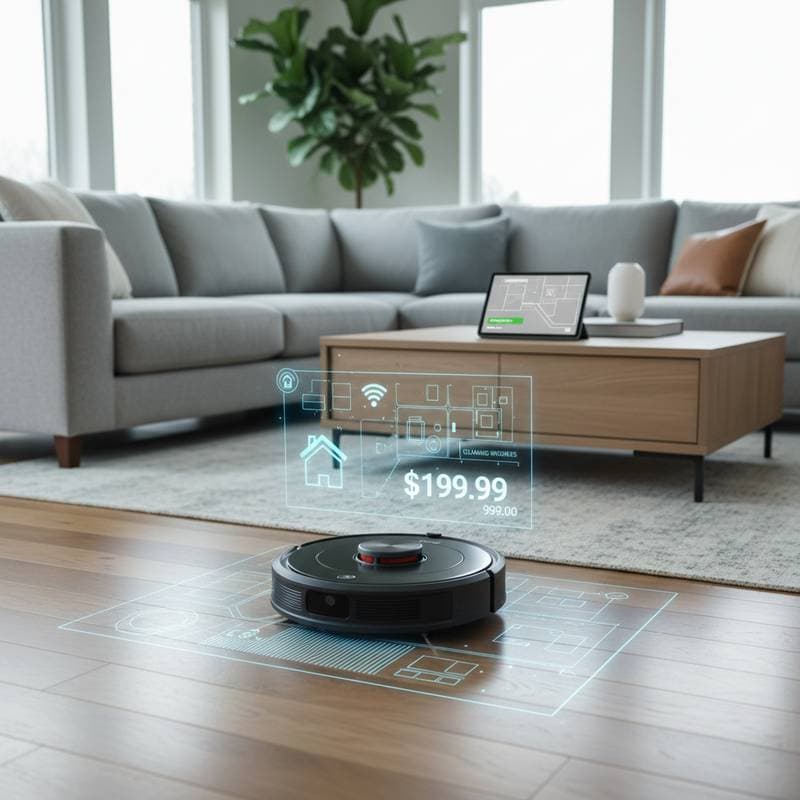
Picture entering your living room after a demanding day. A robot vacuum completes its task with a soft hum, leaving the floor immaculate. The device returns to its base without any intervention from you. Previously, such sophisticated cleaning required an investment near one thousand dollars. Today, LiDAR-equipped models with accurate mapping and robust suction power appear at approximately two hundred dollars. This development democratizes intelligent home cleaning for a broad audience.
The Impact of Affordable LiDAR Robot Vacuums
Many individuals consider a robot vacuum yet pause due to expense. Historically, units with LiDAR technology catered to high-end markets. LiDAR, which stands for Light Detection and Ranging, employs laser sensors to generate real-time maps of living spaces. These maps enable navigation that minimizes collisions compared to earlier models dependent on physical contact or basic sensors. Production costs for these components have decreased rapidly, allowing manufacturers to optimize designs and reduce prices.
Consequently, a selection of cost-effective LiDAR robot vacuums emerges, providing intelligent mapping, targeted zone cleaning, and remote app management at reduced rates. The primary advantage rests in accessing advanced cleaning capabilities without premium pricing. For those seeking a pristine apartment or assistance in managing pet hair alongside periodic thorough cleans, these economical options merit consideration.
Enhancing Cleaning Through LiDAR Mapping
Conventional robot vacuums depend on infrared sensors or simple cameras. They traverse spaces in somewhat erratic routes, revisiting areas and overlooking confined spots. In contrast, LiDAR models employ a rotating laser sensor to gauge distances to walls, furniture, and barriers. This information forms a detailed digital layout, guiding the device along optimal paths.
Precision proves essential. The vacuum proceeds in systematic, linear patterns rather than erratic movements. It retains its position during low battery scenarios and continues upon recharging. Through the associated app, users access the map, assign labels to rooms, and establish virtual restrictions. Direct the unit to avoid a childrens play zone or prioritize the kitchen by defining areas and timetables via smartphone.
Consider this detail: LiDAR functions effectively in dim conditions. Camera-reliant devices frequently falter in darkness or beneath furnishings. A LiDAR unit operates silently during nighttime hours without disorientation, rendering overnight sessions particularly productive.
Selecting Models Across Price Tiers
Costs span a range, yet reliable LiDAR functionality begins near two hundred dollars. Below, three choices illustrate varying budgets and capabilities.
-
Entry-Level Choice: Lefant M210 Pro LiDAR Version - approximately $199
This petite device includes LiDAR guidance, 2200Pa suction, and app-supported mapping. It suits compact apartments or residences with primarily solid surfaces. The debris container remains small, and automatic emptying absents, yet it executes steady routine maintenance. -
Intermediate Choice: Roborock Q5 - approximately $429
This upgrade boosts suction and mapping precision. The Q5 accommodates multiple floor plans, integrates with voice assistants, and enables intelligent zone targeting. It manages denser rugs adeptly and sustains power for expansive areas. -
Advanced Choice: Ecovacs Deebot T10 Omni - approximately $999
This superior variant combines LiDAR with three-dimensional obstacle identification. Features encompass a self-emptying station, mopping capability, and artificial intelligence for room detection. It appeals to users desiring complete autonomy and reduced manual involvement.
All listed models link to Wi-Fi and respond to voice directives via Alexa or Google Home. Evaluate your flooring, residence scale, and desired automation level when deciding.
Initial Setup and Home Mapping Process
Initiating a LiDAR robot vacuum involves simple steps, executed with attention. Remove floor obstacles to permit uninterrupted initial mapping. Conduct the first scan during daylight for optimal sensor calibration, despite LiDARs efficacy in low light. Upon map generation in the app, designate rooms and implement virtual barriers or exclusion zones.
For multi-story homes, perform distinct mapping for each level. Intermediate and advanced units store multiple configurations. Basic models require manual reconfiguration across floors, demanding additional effort yet yielding accurate paths post-setup.
Note this aspect: Certain LiDAR systems apply SLAM, or Simultaneous Localization and Mapping. This method permits real-time map adjustments for relocated furniture or novel hurdles. Thus, living room rearrangements prompt adaptation without comprehensive remapping.
Evaluating Cleaning Efficacy and Realistic Outcomes
Affordable LiDAR vacuums manage everyday refuse effectively. Suction ratings typically range from 2000 to 3000Pa, sufficient for pet fur, food particles, and dust on hard surfaces and shallow carpets. For high-pile rugs, supplement with weekly manual deep cleaning.
Entry-level batteries endure 90 to 120 minutes, addressing 900 to 1200 square feet. Higher models extend beyond 150 minutes. Prioritize units with recharge-and-resume to complete extensive tasks independently.
LiDAR reduces impacts, though minor items like cords, clothing, or playthings may entangle. Clear such elements prior to operation. Schedule runs during absences, or observe the units deliberate movements to appreciate mapping efficiency.
Assessing Costs and Enduring Benefits
Initial purchase represents one factor. Annual expenses for filters, brushes, and optional mop components total twenty to forty dollars. Self-emptying docks minimize manual tasks as add-ons.
Entry models at two hundred dollars offer two to three years of service before battery swaps. Lithium-ion units replace straightforwardly with minimal tools. Premium brands provide warranty extensions or upgrade incentives.
Pet-owning homes benefit from anti-tangle brushes. Fur accumulation challenges some basics; opt for silicone variants that deter wrapping and simplify upkeep.
App Connectivity and Smart Home Synergy
Capabilities extend past navigation. Apps facilitate timetables, live map views, and suction adjustments. Integration with Alexa, Google Home, or Apple HomeKit enables voice activation for commands like initiating or halting sessions.
Verify ecosystem compatibility pre-purchase. Basic units support solely 2.4GHz Wi-Fi, potentially clashing with 5GHz routers. App access may limit to single users in some cases.
For enthusiasts, select brands permit map exports or local oversight through third-party tools. Link to Home Assistant or SmartThings for triggers, such as commencing upon departure or inactivity detection. Configuration yields integrated routines.
Essential Safety and Upkeep Practices
As autonomous electrical devices, LiDAR vacuums necessitate precautions. Install virtual guards near staircases. Secure cords, drapes, and fabrics from paths. Wipe sensors and laser housings with dry microfiber periodically; residue impairs precision.
Mopping models demand manufacturer-specified solutions. Avoid excess liquid or abrasives to prevent damage. Empty bins post-use to preserve suction.
Monthly brush inspections and replacements ensure longevity. Swap filters every two to three months based on frequency. Routine care sustains reliability.
Integrating Smart Cleaning into Your Routine
Acquiring a LiDAR robot vacuum simplifies home management. Identify priorities: budget, power, or ease. Entry-level two-hundred-dollar units provide essential mapping, app oversight, and consistent upkeep.
Larger or mixed-floor homes favor intermediates for enhanced power and multi-map storage. Advanced selections offer emptying and detection for effortless operation.
Automated cleaning maintains tidiness between sessions, reclaiming time from manual chores. This elevates living comfort through reduced effort.
LiDAR technology, once confined to luxury, now serves diverse homes with exactitude. From studios to family dwellings, these devices deliver substantial returns.
Embrace automated solutions to manage debris. For assistance with configuration, explore vetted services via HomeTech Marketplace at no initial cost.
Frequently Asked Questions
What distinguishes LiDAR robot vacuums from camera-based models?
LiDAR employs lasers for precise room mapping, excelling in low light and obstacle evasion beyond camera systems.
Do two-hundred-dollar LiDAR vacuums perform reliably?
Yes, introductory versions suit small to medium spaces effectively, though absent upscale elements like auto-emptying.
Can LiDAR vacuums manage pet hair?
Most handle it well, particularly with anti-tangle silicone brushes. Frequent cleaning aids heavy shedders.
How frequently replace filters and brushes?
Filters every two to three months; brushes every four to six months, adjusted for use and surfaces.
Is Wi-Fi necessary for LiDAR robot vacuums?
It enables app functions like mapping and scheduling; manual controls suffice for basic start or stop.
What lifespan expect from budget LiDAR models?
Two to three years prior to battery or brush renewal; maintenance extends duration.
Do LiDAR vacuums accommodate multiple floors?
Intermediate and advanced store multiple maps; basics require per-level remapping.
Are LiDAR lasers safe for pets and people?
Yes, low-power and enclosed designs comply with safety regulations.