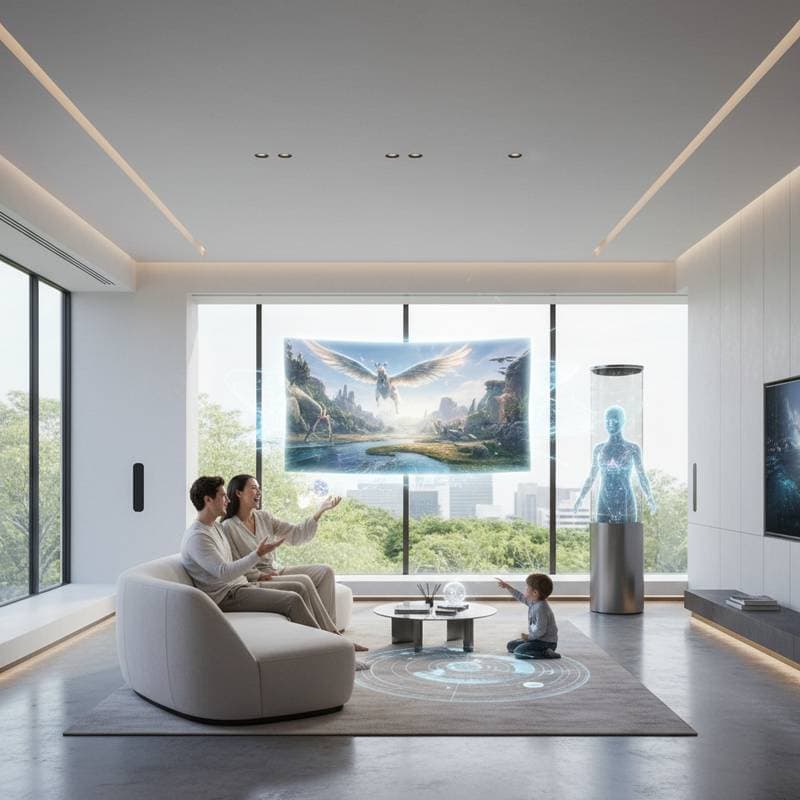
Holographic Displays: The Future of Smart Home Entertainment
Smart homes are advancing from networks of connected devices to fully immersive living spaces. The next stage focuses on entertainment experiences that extend past flat screens. Holographic displays create three-dimensional images that viewers can observe from different angles without glasses.
A New Dimension of Entertainment
These displays project light to form visuals that occupy actual space rather than simulating depth on a surface. A user can watch a concert performer appear to stand in the living room or see game characters move across a table surface. Early spatial display prototypes demonstrate how living rooms can merge virtual elements with existing furniture.
This approach changes content consumption by making digital elements feel present in the physical room. The result is a viewing experience that responds to the viewer's position and movement.
Daily Interactions Made Tangible
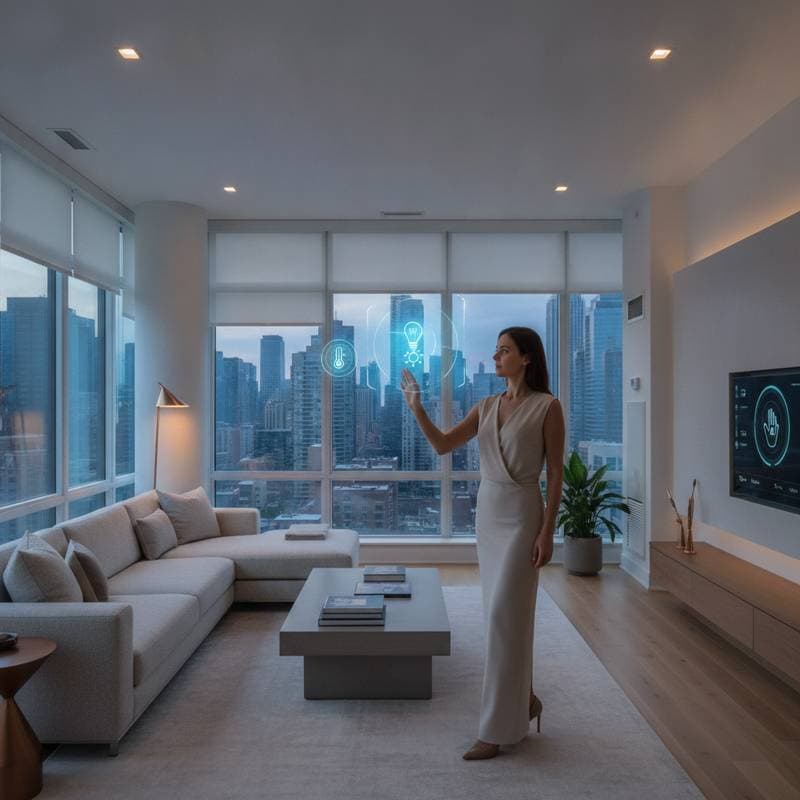
Homeowners can use holographic interfaces to adjust thermostats or view three-dimensional recipe steps on a kitchen surface. A floating control panel appears when a gesture activates it and disappears when no longer needed. Spatial computing platforms under development support these interactions across multiple rooms.
The setup reduces the number of physical devices required. Digital information integrates directly into the environment instead of remaining limited to handheld screens.
New Forms of Storytelling
Content creators are testing holographic projection for narratives that unfold around the viewer. A viewer can walk around a scene rather than watch it on a fixed surface. Educational material gains similar advantages when students examine historical locations or molecular structures at actual scale within their own space.
Audience research indicates growing interest in formats that encourage movement and participation. Holographic systems support this shift by converting viewing sessions into shared physical activities.
Connecting Displays to Existing Systems
Successful adoption requires holographic units to communicate with lighting, audio, and climate controls through open communication standards. A projected scene can trigger automatic lighting changes that match the mood of the content. Smart assistants can appear as three-dimensional figures to deliver schedule summaries or viewing suggestions.
This level of coordination depends on both hardware compatibility and software that manages multiple device types at once.
Current Development Examples
Compact tabletop units already produce small freestanding images without headsets. Larger projection systems under testing fill room volumes and track user movement to adjust the image. Live entertainment companies have run trial holographic concerts that measure audience reactions to realistic presence.
These tests confirm demand for media that feels physically present rather than framed.
Remaining Technical and Practical Barriers
High component costs and the need for new content production pipelines slow broader availability. Projection quality also depends on room layout and ambient light levels. Manufacturers are testing modular units that fit varied floor plans and include portable options for smaller spaces.
Progress follows patterns seen with earlier smart home products that started at premium prices and later reached wider markets.
Practical Benefits for Homeowners
Holographic displays turn entertainment into a shared physical activity. Families can gather around projected game boards or attend virtual events together from one location. Remote meetings gain clearer presence when participants appear at actual size.
As prices decline, the same display surface can handle entertainment, communication, and control functions without additional hardware purchases.
Bringing Holographic Experiences into Your Home
Homeowners planning upgrades can evaluate room layouts for open projection areas and review device compatibility lists from major platforms. The technology reduces reliance on multiple separate screens while increasing the sense of direct interaction with digital content.