Imagine returning home after a demanding day, anticipating the reassuring operation of your robot vacuum maintaining a pristine environment. Instead, you encounter streaks across the floor from a pet accident that the device has distributed throughout the space. This scenario represents a common concern for pet owners who rely on automated cleaning solutions.
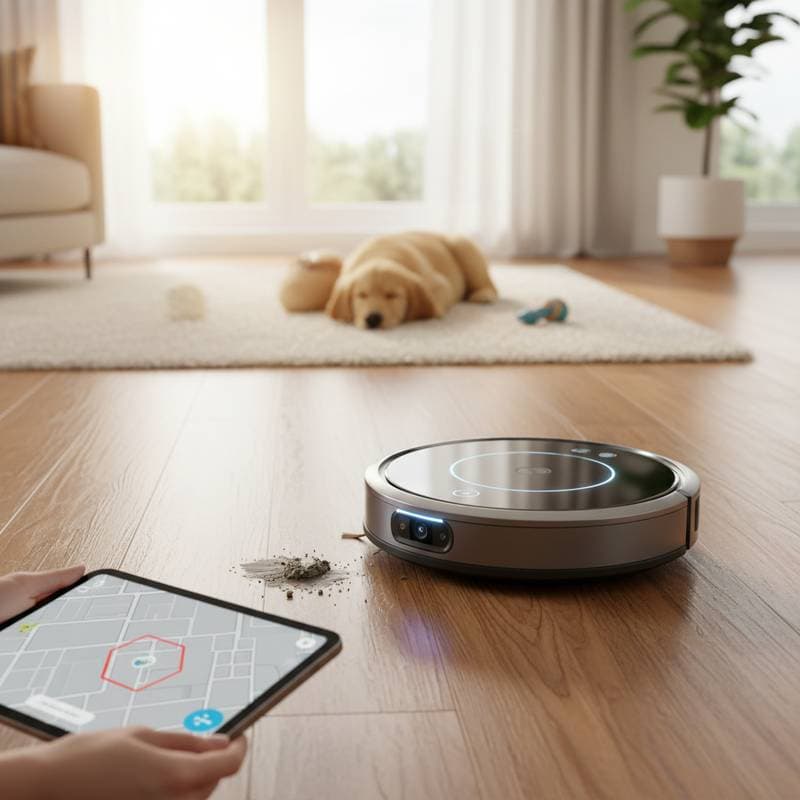
Recent advancements in smart cleaning technology address this issue directly. The newest AI robot vacuums detect pet messes before contact, halting operations promptly to prevent escalation. These devices employ sophisticated cameras, sensors, and machine learning algorithms to achieve this capability.
The Need for Enhanced Detection in Pet-Friendly Homes
Homes with pets offer companionship and joy, yet they often involve unexpected waste incidents. Earlier robot vacuums, regardless of their sophistication, frequently failed to distinguish pet accidents from ordinary debris. Contact with such messes typically resulted in broader contamination and increased odor.
Current models integrate improved imaging systems and sensory inputs for real-time identification. They analyze visual cues including shapes, textures, and color differences indicative of accidents. This proactive approach minimizes cleanup efforts and preserves household hygiene.
Mechanisms Behind AI-Based Mess Detection
Contemporary AI robot vacuums depend on computer vision and machine learning frameworks. Integrated cameras capture detailed images of the floor surface, which algorithms process to categorize potential hazards. Upon recognizing a pet accident, the device immediately pauses, designates the location via the companion application, and notifies the user.
Manufacturers enhance these systems through cloud-supported model refinements. Devices receive periodic updates derived from aggregated, anonymized user-submitted imagery, thereby increasing detection precision over time. Users benefit from evolving performance without additional intervention.
Infrared depth sensors provide supplementary verification by measuring material elevation. These sensors differentiate liquids or pliable solids from typical dust or particles based on light reflection patterns. Such layered analysis ensures reliable avoidance decisions.
Recommended AI Robot Vacuums for Pet Waste Avoidance
Several models excel in incorporating pet accident detection, catering to diverse budgets and home sizes.
-
Lefant M210 Pro Robot Vacuum ($159)
This affordable option delivers essential object recognition paired with robust suction power. Although it omits comprehensive AI mapping, motion sensors effectively limit unintended impacts. It suits compact residences with minimally shedding pets. -
Roborock Q Revo ($899)
Featuring LiDAR for precise navigation alongside AI-driven camera systems, this unit also supports mop elevation and automated dock cleaning. It distinguishes pet waste from items like cables or footwear. The associated application offers thorough room layouts and usage logs. -
iRobot Roomba Combo j9+ ($1,399)
As iRobot's top-tier offering, it employs refined AI to identify pet messes, electrical cords, and scattered clothing. Mop components raise automatically near carpets or barriers. The integrated self-emptying base maintains cleanliness for extended periods.
All listed models integrate with voice assistants such as Alexa, Google Home, or Apple HomeKit. Verify compatibility with current smart home setups prior to purchase to facilitate seamless operation.
Investment and Implementation Factors
Pricing for these devices ranges from $150 to $1,500, influenced by included functionalities. Entry-level units focus on fundamental vacuuming, whereas advanced versions incorporate mopping, hazard evasion, and automated emptying.
Initial configuration requires 15 to 30 minutes. Establish a Wi-Fi connection, generate a home layout, and execute an introductory cleaning session. This process enables the robot to familiarize itself with perimeters and furnishings.
In households prone to pet incidents, prioritize models with reusable mop components and automated cleaning stations. These features lessen hands-on upkeep requirements. For safety, supervise initial runs to assess performance near pet zones like litter areas or food stations.
Optimizing Robot Performance in Pet Environments
Many applications permit designation of restricted zones, allowing users to exclude pet feeding or resting spots. Consistent application of these settings trains the device to navigate accordingly without further adjustments.
For residences spanning multiple levels, select units capable of storing several floor plans. This functionality supports relocation between areas without repeated setup, proving advantageous for varied pet distributions.
Achieving Reliable Smart Cleaning
Effective automation extends beyond mere tidiness to deliver reassurance. Devices that preemptively manage pet messes transform potential disruptions into managed routines.
Prioritize selections emphasizing precise identification, dependable pathfinding, and straightforward upkeep. Integration into daily life should enhance convenience rather than complicate it.
Consult local experts for assistance in selecting and configuring a model aligned with specific needs. Professional guidance ensures optimal smart home synergy and peak efficiency.
Advanced AI robot vacuums empower pet owners with dependable support. Clean surfaces, content animals, and an intelligently managed residence become the standard outcome.
Frequently Asked Questions
Do AI robot vacuums accurately detect pet accidents?
Premium units such as the Roomba Combo j9+ and Roborock Q Revo utilize high-resolution cameras and sensors to recognize pet waste swiftly, often within seconds.