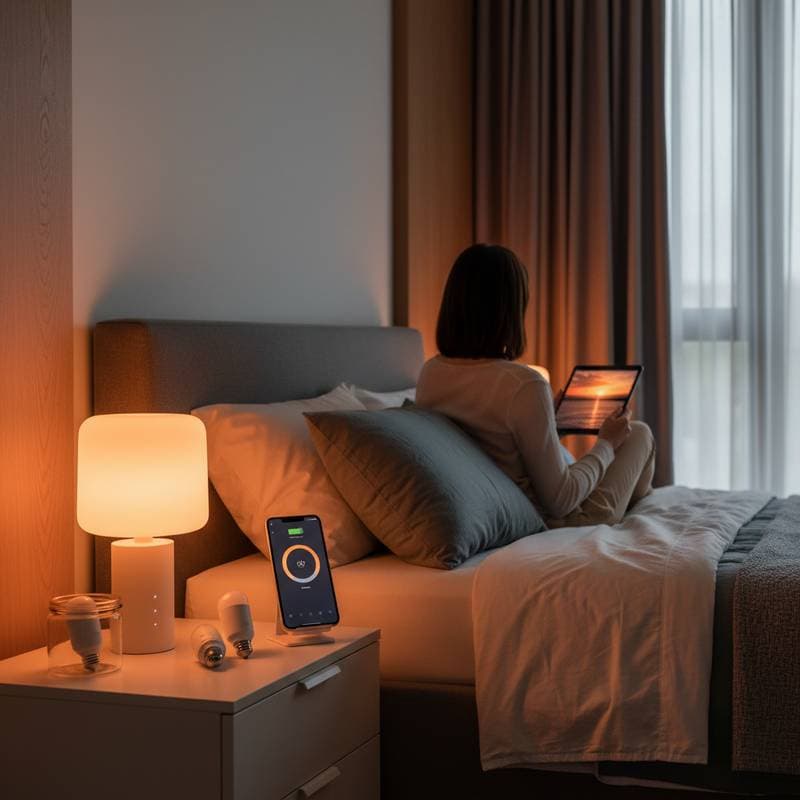
Envision a Restful Evening Under Ideal Light
You settle into bed with your phone, intending to relax. The overhead lights remain stark white, similar to midday illumination, and your eyes strain against the glare. Despite your efforts to feel weary, your thoughts race onward. This common scenario illustrates how improper lighting prevents your body from transitioning to rest.
Advanced smart lighting provides a remedy rooted in nature. Circadian smart bulbs replicate the sun's daily arc, signaling your body to remain vigilant during the day and prepare for sleep at night. Through adjustments to light color and brightness, these bulbs recalibrate your internal clock, fostering superior sleep, emotional stability, and mental clarity.
The Role of Lighting in Sleep Disruption
Your circadian rhythm functions as an internal 24-hour regulator, dictating periods of alertness and drowsiness. Exposure to bright, cool-toned light prompts your brain to suppress sleep hormones and maintain wakefulness. In contrast, warm, subdued light encourages relaxation and hormone release for rest.
Conventional bulbs, particularly intense white LEDs, interfere with this balance by projecting daytime-like illumination into the evening hours. This leads to diminished melatonin levels, prolonged mental activity, and extended screen time beyond your intended bedtime. Persistent exposure contributes to poorer sleep architecture, reduced daytime vitality, and challenges in emotional equilibrium.
Circadian smart bulbs address these issues through programmed transitions. They deliver invigorating cool light in the morning and soothing amber tones by evening. This approach harmonizes with physiological needs, promoting restorative cycles without manual intervention.
The Mechanics of Circadian Smart Bulbs
These bulbs employ tunable white technology, enabling shifts from cool blue-white spectrums to warm golden shades. They integrate with home Wi-Fi networks or dedicated hubs, facilitating automated changes tied to daily or personalized timetables.
Key operational phases include the following:
- Daytime Activation: Bulbs produce light at approximately 5000K during morning and afternoon, emulating sunlight to inhibit melatonin and sustain productivity.
- Evening Transition: Near dusk, they warm to 2700K or below, initiating melatonin synthesis and easing the body into repose.
- Nighttime Preservation: Advanced models offer minimal amber or red outputs, minimizing blue light to support pre-sleep activities like reading.
For optimal performance, connect bulbs to local sunrise and sunset data if available. This feature accommodates seasonal variations, ensuring year-round alignment with environmental cues.
Guide to Upgrading Bedroom Lighting
Target your bedroom first, as lighting exerts the greatest impact on sleep in this sanctuary. Follow these steps to implement an effective system.
Select Appropriate Bulbs
Prioritize bulbs with proven circadian functionality. Consider these options suited to various budgets:
- Affordable Choice: GE Cync Reveal Smart Bulb (approximately $20 each). It provides tunable whites, mobile app management, and integration with leading voice platforms.
- Balanced Option: Philips Hue White Ambiance A19 (approximately $30 each). This model excels in seamless gradients and reliable scheduling via the Hue Bridge.
- High-End Selection: Nanoleaf Essentials A19 Matter Bulb (approximately $50 each). It adheres to the Matter protocol for universal compatibility and precise control.
A complete bedroom array typically ranges from $60 to $200, scaling with fixture count.
Establish a Daily Schedule
Leverage built-in app templates for circadian patterns, or design a bespoke routine:
- Morning Routine: Activate bright, cool illumination to invigorate the start of the day.
- Midday Maintenance: Employ neutral tones to sustain attention without fatigue.
- Evening Wind-Down: Progressively dim to warm hues, preparing for relaxation.
- Bedtime Mode: Apply subtle amber or red for minimal disruption.
Integrate with hubs such as Amazon Echo or Google Home to link lighting with complementary actions, like fading lights alongside temperature adjustments or audio cues.
Incorporate Layered Illumination
Avoid dependence on a solitary overhead source. Blend ceiling fixtures with table lamps or accent lights to create adjustable zones. A circadian-equipped bedside lamp allows comfortable reading while keeping ambient light low.
Enhance further with sensors that activate gentle amber glows during nighttime movements, averting startling brightness and preserving sleep continuity.
Align Lighting with Daily Habits
Amplify effectiveness by coordinating with routines. Program an automatic dimming sequence one hour before sleep to cue mental slowdown. During this window, minimize screen brightness or activate device filters.
For irregular schedules, select adaptive bulbs that analyze usage patterns and refine timings autonomously.
Key Factors for Implementation
Evaluate these elements prior to investment to ensure a seamless upgrade.
Cost and Expansion
An entry-level configuration with two to three bulbs costs less than $100. Whole-home deployment may exceed several hundred dollars. Fortunately, modular systems permit incremental additions without compatibility issues.
System Integration
Verify alignment with current ecosystems. Opt for bulbs supporting Alexa or Google Assistant if those platforms dominate your setup. For longevity, prioritize Matter or Thread standards to accommodate future devices.
Installation and Durability
These bulbs install easily in standard sockets, but confirm fixture suitability. Steer clear of sealed enclosures unless manufacturer-approved, to prevent overheating and extend service life. For custom wiring, engage a qualified electrician.
Data Security
Cloud-dependent apps power most features. To safeguard privacy, choose hub-based models that function offline, maintaining operation during connectivity lapses.
Additional Advantages of Circadian Systems
Beyond sleep enhancement, these bulbs yield multifaceted gains.
- Enhanced Wakefulness: Gradual morning brightening eases arousal, reducing grogginess compared to abrupt activation.
- Emotional Balance: Balanced light exposure aids serotonin production, stabilizing mood over time.
- Efficiency Gains: Scheduled reductions in intensity cut energy consumption by up to 30 percent versus static setups.
- Ocular Relief: Variable spectrums alleviate strain from prolonged screen or task lighting.
Notably, certain systems pair with fitness trackers. Philips Hue, for instance, incorporates data from Fitbit or Apple Health to optimize schedules based on observed sleep metrics, refining performance iteratively.
Optimizing Your Space for Restorative Sleep
Lighting forms a cornerstone, yet integrates best within a holistic environment. Pair it with climate and acoustic controls for comprehensive improvement.
- Thermal Settings: Maintain 65 to 70 degrees Fahrenheit; devices like the Nest Learning Thermostat automate bedtime cools.
- Auditory Elements: Employ speakers for steady white noise or serene soundscapes.
- Ventilation: Combine with air purifiers to ensure clean circulation during slumber.
These synergies reinforce signals, cultivating a predictable pathway to deep rest.
Implementing Circadian Lighting Effectively
Transitioning to circadian smart bulbs represents an accessible path to natural sleep improvement. Begin modestly with one fixture to gauge benefits, then scale as needed. The progression from crisp dawn tones to mellow dusk warmth integrates effortlessly into daily life.
For intricate setups or system mergers, explore professional assistance through vetted experts on XavageTech Marketplace. They tailor solutions to your lifestyle, finances, and hardware.
Rest need not evade you nightly. Circadian lighting directs your physiology toward renewal, backed by established research, culminating in revitalized mornings.
Frequently Asked Questions
What if my home lacks smart hubs? Many circadian bulbs operate via direct Wi-Fi, bypassing the need for additional hardware. Start with app-controlled models for simplicity.
How quickly do benefits appear? Users often notice improved sleep within one to two weeks of consistent use, with mood enhancements following shortly after.
Can these bulbs replace all traditional lighting? They integrate well but pair best with layered setups for versatility across rooms and activities.
Are there health risks? No, when used as directed; they promote natural cycles without emitting harmful wavelengths.