Imagine a Kitchen That Anticipates Your Needs
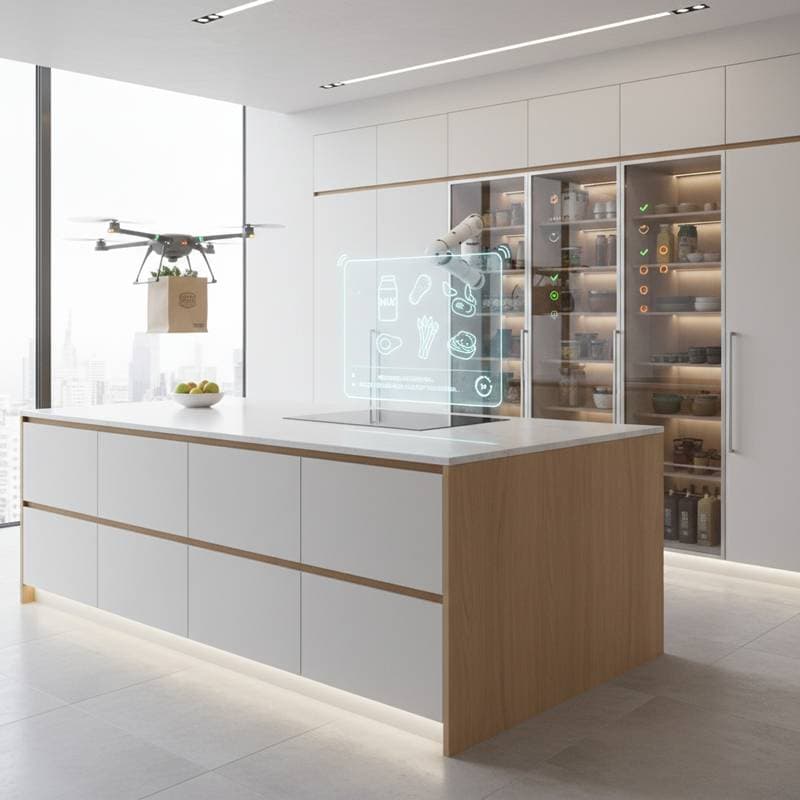
You open the refrigerator to prepare dinner and discover the milk supply is low. Before you can note it on a shopping list, the smart kitchen system has already placed an order with your selected grocer. By the end of the meal, the purchase is confirmed, and fresh delivery arrives the following day, aligned with your schedule. This scenario represents the current capabilities of smart kitchens, which use recipes and usage patterns to automate grocery ordering.
Grocery management often burdens households with constant tracking of essentials, preferences, and plans. Automation shifts this burden, creating an integrated network that streamlines preparation and eliminates routine tasks.
Why Smart Kitchen Automation Appeals to Users
Convenience and accuracy drive the popularity of these systems. Appliances, applications, and grocery services form a unified network that monitors stock levels, forecasts requirements, and initiates purchases. This proactive approach replaces manual tracking and emergency store visits with continuous oversight of inventory and future demands.
Busy families reclaim weekly hours previously spent on shopping. Enthusiastic cooks find ingredients ready for spontaneous recipes. Waste-conscious individuals benefit from purchases tailored to actual consumption, minimizing excess.
Mechanisms Behind Automated Inventory and Ordering
Auto-ordering relies on interconnected devices that maintain real-time kitchen records. Refrigerators, scales, and apps exchange data via home networks to log contents and usage.
Essential Elements
-
Intelligent Appliances
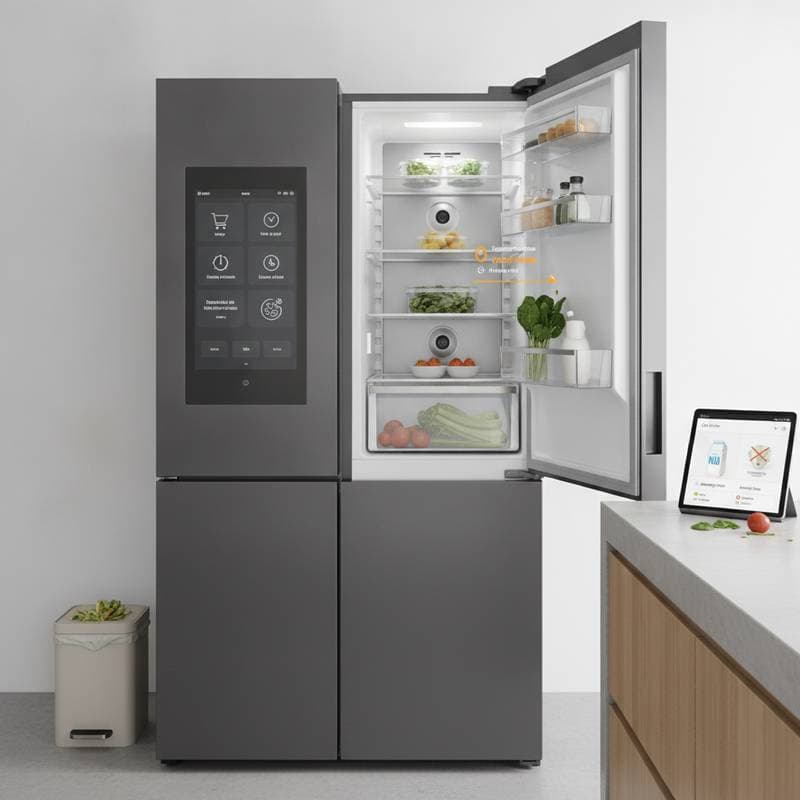
Modern refrigerators, such as the Samsung Family Hub model priced at approximately $2,299, feature interior cameras and barcode scanners. These tools monitor item entries and exits, project expiration timelines, and propose recipes from available stock. -
Recipe Management Applications
Platforms like Whisk, Yummly, and SideChef link with appliances and delivery providers. They review stored recipes against pantry data, compile shopping lists, and execute orders as needed. -
Voice Assistants and Control Centers
Devices including Amazon Alexa or Google Assistant enable verbal additions or order approvals. Hubs like the Amazon Echo Show 15 ($279) or Google Nest Hub Max ($229) provide visual interfaces for recipes, lists, and confirmations. -
Delivery Service Integrations
Systems connect with Amazon Fresh, Instacart, and Walmart+ to automate restocking and coordinate arrival times.
Advanced Feature Insight
Predictive ordering analyzes usage cycles for proactive restocking. For instance, if weekend smoothies form a habit, the system ensures fruits and yogurt arrive beforehand. This relies on behavioral pattern analysis beyond mere stock checks.
Establishing an Automated Smart Kitchen
Upgrade your kitchen incrementally, focusing on interoperable components rather than full replacement.
Initial Steps
Select a Central Controller
A hub serves as the coordination point. Basic options include the Amazon Echo Dot ($49) for voice commands. Advanced units like the Echo Show 15 or Google Nest Hub Max support visual oversight and tracking.
Integrate Current Devices
Connect Wi-Fi-equipped refrigerators, ovens, or scales through manufacturer applications. Brands such as LG ThinQ and GE Profile enable broad compatibility. For non-smart items, add-ons like the Smarter FridgeCam ($149) or Drop Smart Scale ($99) provide entry points.
Choose a Delivery Provider
Match services to preferences: Instacart for local access or Amazon Fresh for reliable subscriptions. Verify alignment with recipe tools, delivery slots, and stock options.
Link Recipes to Inventory
Pair recipe apps with grocery accounts. Upload personal recipes; the system flags owned ingredients and lists shortages, scaling quantities for household needs.
Configure Automation Preferences
Options range from full auto-order for staples like dairy to manual review for unique items. Begin with partial automation to assess reliability.
Equipment Recommendations by Investment Level
Tailor selections to financial and technical comfort. Consider these configurations:
Entry-Level Configuration (Under $500)
- Amazon Echo ($99) for voice control
- Smarter FridgeCam ($149) for monitoring
- Whisk app (free) for integration
- Instacart for deliveries (per-order fees)
This arrangement tracks contents, builds lists, and supports voice-initiated purchases.
Intermediate Configuration ($800–$1,500)
- Google Nest Hub Max ($229) for displays
- Drop Smart Scale ($99) for precision
- Smarter FridgeCam or equivalent ($149)
- Amazon Fresh or Walmart+ subscription ($12.95 monthly)
Expect visual updates, suggestions, and scheduled orders.
High-End Configuration ($2,500+)
- Samsung Family Hub refrigerator ($2,299)
- GE Profile smart oven ($1,999)
- Echo Show 15 ($279)
Full synchronization manages planning, stock, and deliveries, adapting to diets or preferences.
Key Factors for Successful Implementation
Automation streamlines operations but demands upfront planning.
Financial and Ongoing Expenses
Core connections cost nothing, yet advanced tools and deliveries involve fees. Assess spending patterns to quantify savings from reduced waste and trips.
Data Privacy Measures
Systems gather consumption details; review policies on storage and sharing. Established providers offer controls to restrict data use.
Device Harmony and Future-Proofing
Verify ecosystem matches, such as Samsung with Alexa or LG with Google. This prevents integration issues during expansions.
Installation Safety
For sensors near moisture or heat, engage professionals. Adhere to guidelines for secure, certified setups.
Benefits of Predictive Ordering Systems
These tools enhance efficiency subtly, reshaping cooking routines. By studying trends, they refine lists dynamically; a shift to plant-based eating prompts produce increases and protein reductions. Recipe adjustments utilize on-hand items, curbing spoilage.
Smart substitutions handle shortages by selecting alternatives based on past choices, maintaining consistency amid supply fluctuations.
Promoting Sustainability Through Automation
Expiration monitoring and timely recipe prompts prevent waste. A nearing-expiry vegetable might inspire a specific dish. Portion optimization evolves from usage data, avoiding overstock.
Emerging smart packaging with scannable codes automates updates, boosting both ease and eco-friendliness.
Extending to Full Smart Home Connectivity
Kitchen systems integrate with home networks for enhanced flow. Ovens preheat via tablet inputs; lights shift for prep. Delivery notifications via cameras enable secure, hands-free receipt.
This orchestration frees focus for enjoyment over administration.
Building Familiarity with the System
Initial adoption may challenge traditionalists. Introduce gradually, automating simple restocks first. Resources like guides and user groups aid progression.
Confidence builds as reliability proves consistent, expanding scope to comprehensive planning.
Steps to Integrate and Optimize
Prioritize connectivity over hardware volume. Start with essential links and a delivery service, then evaluate against routines. Gradually incorporate devices, fine-tuning for intuition.
Soon, procurement fades into background assurance, with the kitchen as a responsive ally that elevates daily meals without diminishing their pleasure.