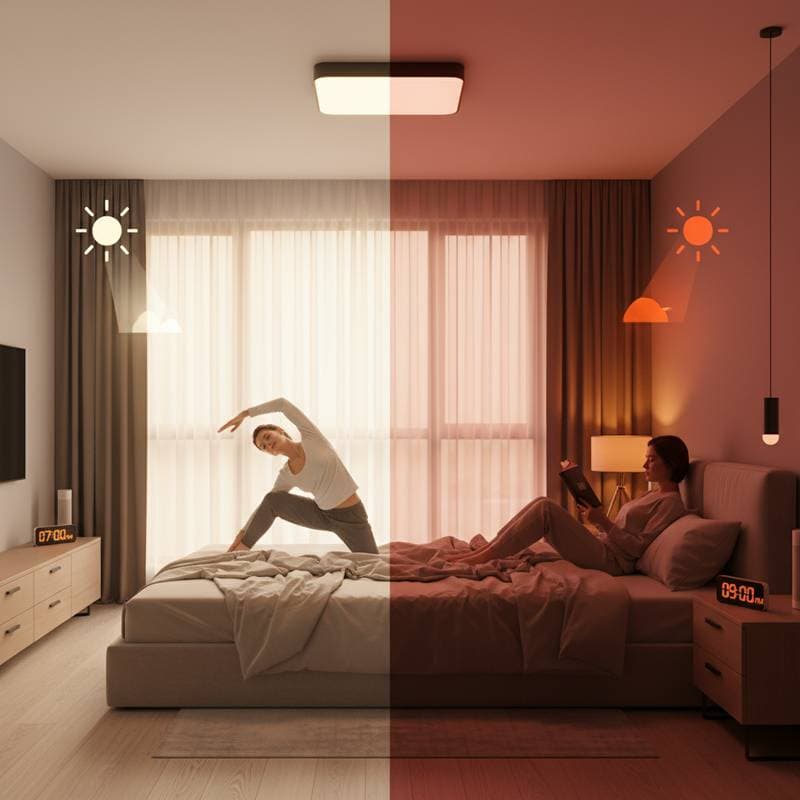
Imagine Waking Up Naturally Rested
You have experimented with blackout curtains, white noise machines, and high-end mattresses, but mornings remain groggy. The issue may lie not in your routines or caffeine habits, but in your lighting. Specifically, the interaction between your home lighting and your body's circadian rhythm holds the key.
Artificial light profoundly influences the sleep-wake cycle, yet many overlook this factor. Light signals to the brain whether to remain alert or prepare for rest. Circadian rhythm lighting, or human-centric lighting, aligns with these natural patterns to promote faster sleep onset and refreshed awakenings.
Implementing this technology requires no major renovations. Updates to a single room or an entire smart system can reshape sleep quality, daytime focus, and overall well-being.
Why Lighting Affects Your Sleep
The body uses light signals to govern melatonin production, the hormone that induces sleepiness. Exposure to bright, cool-toned light during the day suppresses melatonin and promotes alertness. In contrast, warm, dim light in the evening triggers its release.
Standard bulbs maintain a fixed color temperature all day, disrupting this balance and leading to irregular sleep patterns. Even after sufficient hours in bed, individuals feel fatigued due to this misalignment. Circadian rhythm lighting counters this by emulating the sun's daily arc.
Morning illumination starts bright and cool to invigorate the body. It gradually softens through the afternoon and shifts to warm amber tones at night, fostering natural transitions between activity and repose. Lighting experts emphasize color temperature, measured in Kelvin, over mere brightness for optimal sleep regulation. Target 2700K for evenings and 6500K for daytime to realign your internal clock effectively.
How Circadian Rhythm Lighting Works
This system operates through smart bulbs or fixtures that modulate brightness and color temperature via programmed schedules or environmental sensors. Connectivity options include Wi-Fi, Bluetooth, or Zigbee protocols, enabling control through mobile applications, voice commands, or automated routines.
Advanced setups integrate with devices like sleep trackers or thermostats for holistic environmental management. Such synchronization ensures dimmed lights pair with cooler temperatures and subdued sounds, enhancing sleep consistency.
Begin with a single bulb for targeted improvements, or scale to a comprehensive home network. The core principle remains: recreate outdoor light variations indoors to support biological rhythms.
Getting Started: Step-by-Step
1. Identify Your Lighting Zones
Map areas where lighting impacts sleep most directly, such as bedrooms for evening wind-down and mornings, bathrooms for post-sleep routines, and living spaces for transitional use. Consider screen-heavy zones like home offices, where warmer evening hues can mitigate blue light interference and ease into rest.
2. Choose the Right Products
Select from a range of options suited to different budgets:
- Budget Option: Wyze Bulb Color, priced at approximately $12 per bulb, delivers adjustable white light with app-driven scheduling. It serves as an accessible introduction to circadian adjustments.
- Mid-Range Choice: Philips Hue White Ambiance Starter Kit, around $120 for four bulbs and a hub, enables fluid color shifts and works seamlessly with platforms including Alexa, Google Home, and Apple HomeKit.
- Premium Selection: Ketra S30 system, starting at about $100 per bulb, offers superior color fidelity and lifelike daylight emulation, ideal for wellness-oriented residences or upscale hospitality settings.
3. Set Your Light Schedule
Leverage app-provided circadian presets, then tailor them to your daily routine. For instance, program bedroom lights to transition from 6500K at dawn to 2200K after sunset.
Incorporate geofencing if your schedule varies; this technology detects your location and automates adjustments, maintaining rhythm without constant oversight.
4. Integrate Other Smart Devices
Enhance effectiveness by linking lighting to complementary tools:
- Smart thermostats, such as the Ecobee Premium, to gradually reduce nighttime temperatures for deeper sleep.
- Smart shades like Lutron Serena, which automate natural light filtration to complement artificial cues.
- Voice assistants for effortless, hands-free operation during low-energy periods.
This integration builds a cohesive habitat that bolsters both sleep and vitality.
5. Test and Refine
Allow two to four weeks for physiological adaptation. Monitor morning alertness and evening relaxation, then tweak settings accordingly. Delay morning brightening if early awakenings occur, or advance evening dimming to combat bedtime resistance.
Practical Considerations
Budget and Installation
Initiate changes affordably by outfitting one space for less than $100 with basic tunable bulbs. Full-home implementations range from $500 to $2,000, influenced by fixture quality and automation depth.
Many systems support self-installation via standard sockets. For wired integrations like recessed lighting, consult a licensed electrician to guarantee safety and reliability.
Compatibility and Longevity
Verify alignment with your existing smart ecosystem before purchase. Brands like Philips Hue and LIFX support Alexa, Apple HomeKit, and Google Home effortlessly. Systems such as Ketra often demand expert configuration for peak performance.
Opt for bulbs with 25,000 to 50,000-hour lifespans, which minimize long-term replacement needs and justify upfront expenses.
Maintenance and Software Updates
Regularly update applications to unlock enhanced scheduling and resolve glitches. Periodically recalibrate if hues shift or routines falter, and dust fixtures to preserve color precision.
Benefits Beyond Sleep
Beyond restful nights, circadian lighting sharpens daytime concentration, alleviates visual fatigue, and elevates mood stability. Professional environments like offices and educational institutions report heightened productivity and vigilance after adoption.
In residential settings, users experience sustained morning vigor and serene evenings. These incremental improvements cultivate equilibrium seldom achieved with conventional illumination, extending wellness across waking hours.
Common Questions
What is the difference between tunable white and full-spectrum lighting?
Tunable white adjusts between warm and cool tones for daily needs. Full-spectrum encompasses the complete range of visible wavelengths, more faithfully mimicking sunlight.
Can circadian lighting help with insomnia?
It reinforces natural sleep signals to foster better habits, though persistent insomnia warrants consultation with a healthcare provider.
Do I need a smart hub?
Wi-Fi bulbs like LIFX operate independently, while hub-based ones such as Philips Hue ensure stable connectivity and expanded features.
What if I prefer lamps instead of ceiling lights?
Substitute lamp bulbs with tunable versions for a low-commitment trial, allowing gradual assessment of advantages.
Can I use circadian lighting in a rental?
Yes, standard screw-in bulbs require no alterations and remain portable upon relocation.
Does blue light blocking affect circadian lighting?
Evening settings inherently minimize blue wavelengths, aiding melatonin production and rest preparation.
Are these lights energy efficient?
LED construction ensures minimal power use compared to traditional bulbs, yielding electricity savings over time.
Is there any maintenance required?
Routine app updates and occasional cleaning suffice; firmware tweaks prove rare.
Implement Circadian Lighting for Lasting Balance
Awaken to gentle dawn simulation rather than abrupt alarms, or ease into slumber with amber hues, and the value becomes evident. Circadian rhythm lighting simplifies access to enhanced rest and daily harmony.
From a serene sleeping quarters to an interconnected intelligent residence, this solution paves a practical route toward sustained health. Embrace the shift to align your environment with your biology for revitalized days and nights.