AI Anticipates Appliance Issues Months Before They Occur
Smart homes advance past basic automation and voice commands toward intelligent foresight. Predictive systems now detect potential failures in appliances like washing machines or refrigerators well in advance. This capability, powered by artificial intelligence, enables timely interventions that maintain household routines without interruption.
Why Predictive Maintenance Addresses a Key Household Challenge
Appliances form the backbone of daily life, but failures often lead to unexpected expenses and inconvenience. Surveys indicate that appliance breakdowns rank high among homeowner aggravations, comparable to connectivity issues. Traditional approaches involve waiting for problems to escalate, resulting in rushed repairs and higher costs.
Predictive maintenance disrupts this cycle through continuous monitoring. AI examines subtle indicators of wear, allowing for planned servicing. Originating in industrial settings, this technology now adapts to residential use, redefining appliance management as a preventive rather than corrective process.
The Mechanics of AI Failure Prediction
Contemporary appliances equip with sensors that capture metrics such as vibration levels, power consumption, and operational sounds. AI algorithms process this information against established norms to identify anomalies. Upon detection, the system projects the timeline for component degradation.
Consider a dishwasher exhibiting minor power fluctuations; the AI interprets this as early bearing wear and calculates remaining operational cycles. Advanced setups draw from aggregated data across devices, enhancing prediction precision through pattern recognition from broader networks.
Key Advantages for Everyday Homeowners
Homeowners benefit from cost reductions as early alerts avert emergency calls and prolong equipment lifespan. Notifications arrive via apps, prompting scheduled checks rather than sudden discoveries of malfunction. This proactive stance transforms maintenance into a seamless aspect of home management.
Sustainability gains emerge from optimized performance, which lowers energy demands and emissions. By facilitating repairs over replacements, these systems curb electronic waste. Individuals prioritizing green practices find alignment in tools that promote efficient resource use.
Leading Implementations from Industry Pioneers
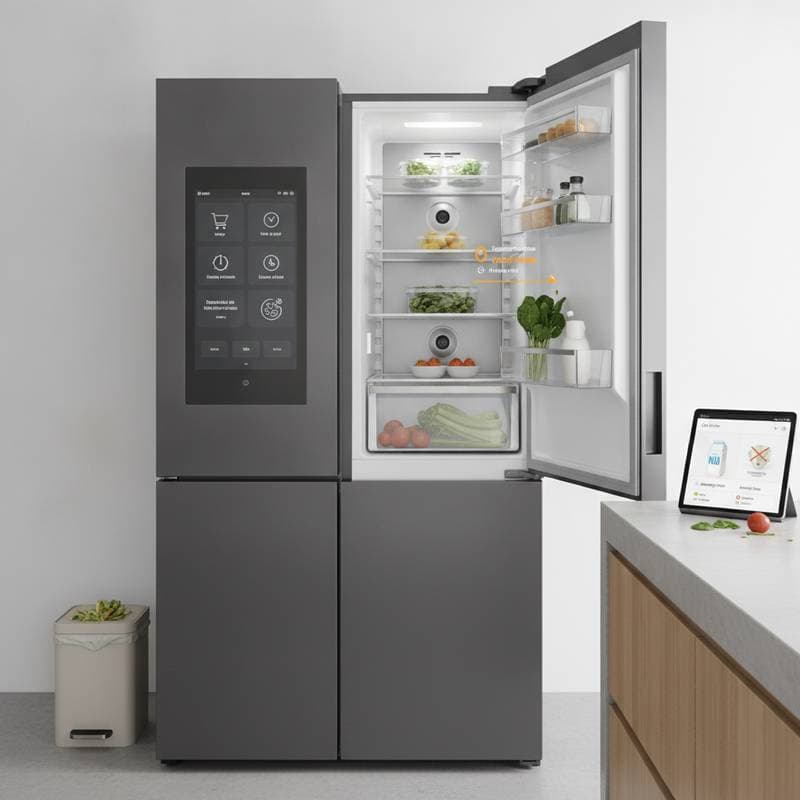
Established manufacturers lead with integrated solutions. Whirlpool's connected washers evaluate vibration patterns to signal impending drum problems. LG's ThinQ technology scans for filter clogs or motor strain, issuing timely user notifications.
Samsung's SmartThings platform oversees multiple devices, from ovens to dryers, delivering consolidated alerts. Emerging firms like Plentify integrate monitoring with energy analytics to foresee maintenance needs. These innovations not only prevent issues but also refine consumption patterns for bill savings.
Enabling Connectivity Across Devices
Effective prediction hinges on uninterrupted data exchange. Fragmented ecosystems from various brands complicate unified oversight. Standards like Matter facilitate cross-manufacturer communication, standardizing data protocols.
A central hub compiles inputs from all connected appliances, offering a comprehensive health overview. Users access a dashboard revealing timelines for actions, such as servicing a dishwasher or replacing an air filter, streamlining household planning.
Evolving Accuracy Through Continuous Learning
AI platforms refine predictions with accumulated data. Over time, models adjust based on real-world outcomes, minimizing inaccuracies. This self-improvement ensures reliable guidance for users.
Manufacturers leverage anonymized datasets from user communities. Insights from one device's failure inform predictions for similar units network-wide. Such collaborative learning elevates system performance for all participants.
Addressing Privacy and Building User Confidence
Data collection for monitoring prompts valid concerns over security. Users seek controls over shared information, including usage and energy profiles. Industry responses include detailed disclosures and customizable privacy options.
Adoption accelerates with transparent practices that highlight benefits like extended warranties. Platforms succeeding in this area balance data utility with user autonomy, fostering widespread acceptance.
Enhancing Service Efficiency for Professionals
Technicians gain from pre-arrival diagnostics, arriving prepared with appropriate components. This preparation shortens resolution times and reduces homeowner inconvenience. Remote troubleshooting handles software glitches without on-site visits.
Future models may introduce subscription-based care, akin to wellness plans. Monthly fees encompass monitoring and preventive actions, creating mutual advantages for providers and residents through sustained reliability.
Navigating Challenges to Broader Implementation
Initial costs for sensors and connectivity elevate appliance prices. Inconsistent brand compatibility hinders seamless setups in diverse homes. Consumer familiarity with predictive features requires time to develop.
Solutions include over-the-air updates and retrofit modules for legacy devices. Declining hardware expenses and advancing standards position predictive capabilities as accessible norms rather than luxuries.
Embracing Proactive Home Management
Predictive technology extends beyond appliances to holistic household anticipation. It could signal supply shortages or energy surges, integrating seamlessly into daily life. Families experience reduced interruptions, while professionals reclaim time from diagnostics.
This background orchestration makes upkeep unobtrusive, supporting focused living.
Steps to Integrate Predictive Features Today
Evaluate current appliances for connectivity options and activate any dormant monitoring tools. Select hubs supporting multiple brands to centralize insights. When purchasing new devices, prioritize those with built-in AI diagnostics.
Monitor app notifications diligently and schedule services promptly. These actions yield immediate gains in efficiency and cost control, paving the way for a resilient home environment.