AI-Powered Kitchens Reduce Food Waste and Deliver $1,200 in Annual Savings
Smart homes evolve beyond mere convenience into environments that enhance daily life. The kitchen stands at the forefront of this transformation. AI-powered appliances reshape how households manage shopping, storage, and meal preparation. These systems minimize waste, streamline planning, and generate substantial savings, often reaching $1,200 per year for families. This evolution emphasizes technology's role in fostering efficiency and sustainability in routine tasks.
Building Smarter Habits in the Kitchen
Households frequently encounter issues like overlooked leftovers or spoiled produce. Experts attribute much of this waste to limited visibility, excessive purchases, and disjointed planning between shopping and meals. AI kitchens address these challenges with real-time monitoring and automated features.
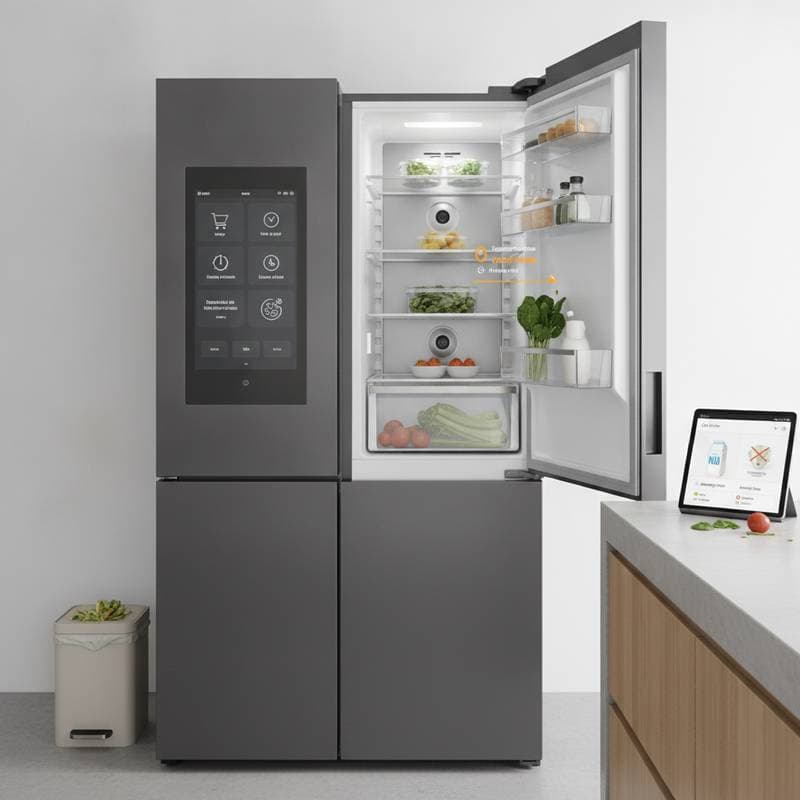
Advanced refrigerators incorporate cameras and sensors to catalog contents without manual input. Companion applications monitor expiration dates, propose recipes, and create shopping lists based on existing inventory. Over time, these tools adapt to family preferences and usage trends, curbing excess purchases and ensuring ingredients receive attention.
The Central Role of the AI Refrigerator
The refrigerator serves as the core of the AI kitchen ecosystem. It functions not only as storage but as a networked command center for ingredient oversight and device integration. Certain models employ visual recognition to record items upon placement, while others interface with voice assistants for inventory alerts.
Consider accessing the refrigerator to receive a prompt about using spinach promptly, paired with a simple pasta recipe idea. Such interactions occur routinely with products from brands like Samsung and LG. These refrigerators suggest meals from available items, discourage unplanned buys, and encourage nutritious eating. Continuous learning refines recommendations to align with specific household routines.
Predictive Tools to Minimize Waste
AI extends beyond mere tracking to anticipate future requirements. Algorithms examine usage data to project shopping needs accurately. This approach leads to targeted purchases and diminished spoilage.
Research indicates that families using AI inventory management halve their food waste. Benefits arise from eliminated redundancies and prevented expirations, translating to monthly grocery reductions. Annually, these efficiencies accumulate to approximately $1,200 in preserved value.
Extending Intelligence Across Kitchen Appliances
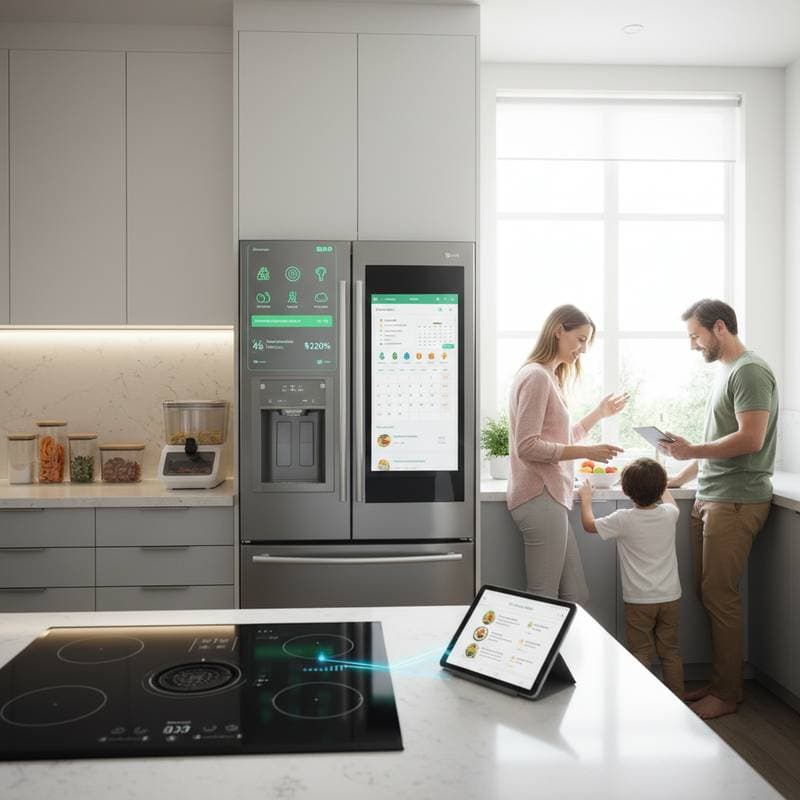
AI integration reaches ovens, stovetops, and dishwashers, enhancing preparation and maintenance. Intelligent ovens calibrate temperatures according to recipe specifications, while linked scales ensure precise measurements to optimize ingredient use.
Whirlpool's connected ovens, for instance, synchronize with recipe databases for hands-off cooking. The refrigerator identifies suitable ingredients and relays instructions to the oven, which handles settings autonomously. This coordination eliminates errors and maximizes resource utilization.
Voice assistants contribute by enabling queries on stock levels, oven preheating, or list updates through simple commands. Every element in the kitchen operates with purpose, streamlining workflows.
Balancing Savings with Environmental Impact
Waste reduction yields financial gains and planetary benefits. Discarded food significantly contributes to methane emissions in landfills, with typical households wasting a notable share of purchases. AI interventions shrink this impact directly.
Key sustainability features include:
- Precise tracking of perishables and deadlines.
- Automated planning to utilize items before spoilage.
- Optimized energy use through adaptive appliance functions.
- Informed purchasing to limit excess packaging.
These elements position the kitchen as a hub for personal efficiency and broader ecological responsibility.
Addressing Challenges to Widespread Use
AI kitchens transition from novelty to practicality. Initial costs pose a primary obstacle, though declining prices from increased competition make them viable. View these setups as investments; grocery and energy savings recoup expenses swiftly.
Compatibility issues once fragmented experiences, with devices locked to proprietary systems. Current developments prioritize open protocols like Matter, enabling cross-brand harmony. This connectivity broadens appeal for standard homes.
Insights from Early Users
Adopters highlight eased routines and lowered anxiety. One family noted their refrigerator's adaptation to weekly patterns, halving shopping duration through refined lists. A pair with integrated cooking tools reported near-elimination of produce discards via timely recipe prompts.
Commercial sectors, including restaurants and delivery operations, apply analogous systems for inventory and demand forecasting. These implementations maintain quality while curbing losses, signaling future consumer advancements toward comprehensive optimization.
Preserving Creativity Amid Automation
Automation handles logistics, yet cooking retains its intimate nature. AI serves as an enabler, clearing obstacles in organization to emphasize innovation and pleasure. Systems function as collaborative aides rather than dominators.
Families gain time for shared dining over logistical concerns. Health-conscious individuals access customized recipes aligned with objectives, and time-strapped workers enjoy automated reordering. Adaptability accommodates varied needs seamlessly.
Steps to Integrate AI into Your Kitchen
Begin upgrades modestly with a smart refrigerator or app for pantry management to boost order and cut waste. Gradually incorporate aligned tools like ovens and scales for unified performance.
To optimize results:
-
Link appliances via a common interface for fluid interactions.
-
Review analytics on usage to inform decisions.
-
Schedule weekly plans leveraging existing stock.
-
Document reductions in spending and utilities to quantify gains.
Embracing Efficiency for Everyday Life
AI kitchens integrate seamlessly into modern homes, blending smart features with practical demands. They elevate functionality, conserve resources, and enhance well-being through thoughtful design.